
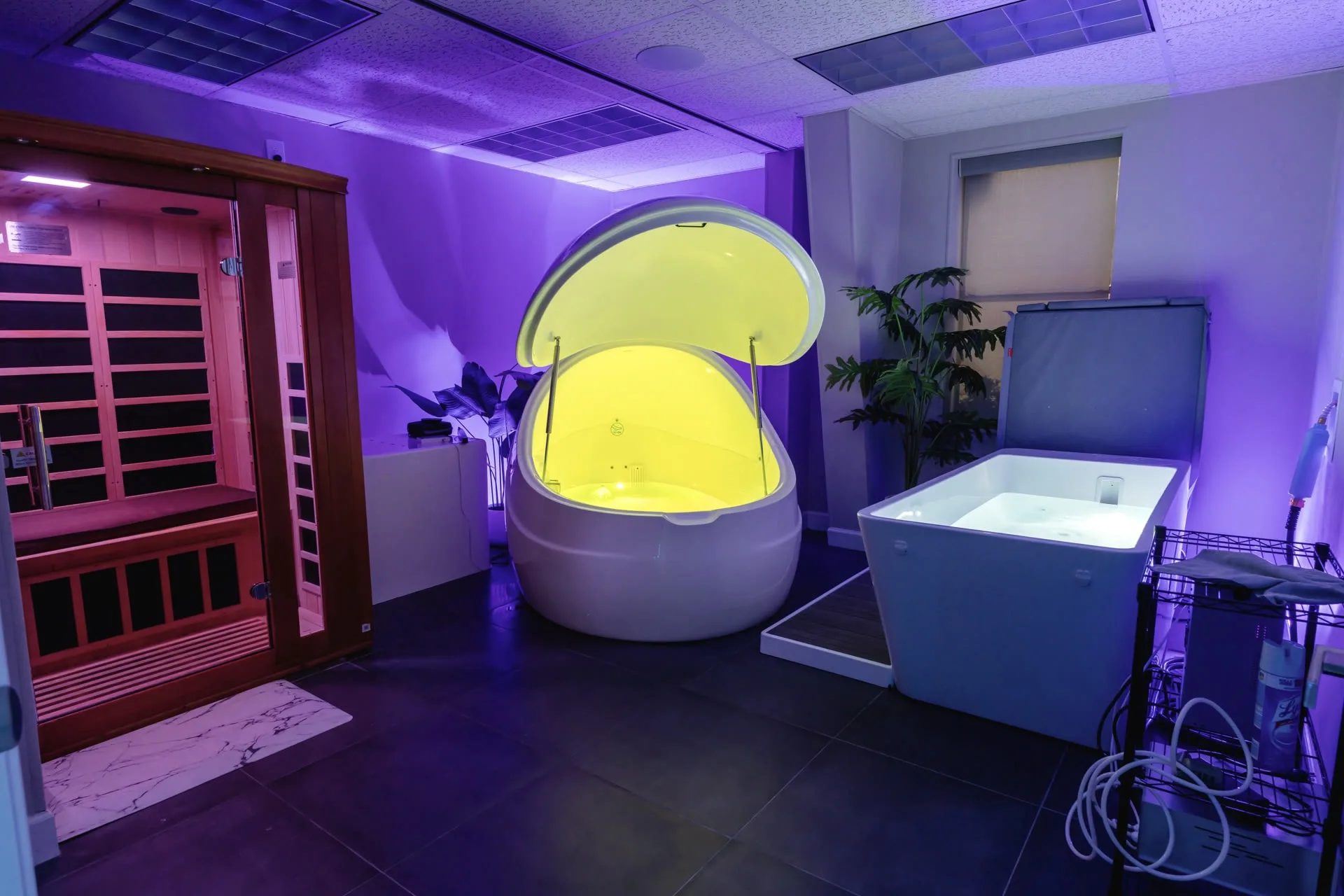
Hyperbaric oxygen therapy is no longer the exotic intervention it was a decade ago. In the last six years it has migrated from hospital decompression units into the recovery rooms of operating rooms, professional sports facilities, and private wellness practices — and the evidence has migrated with it. At Wellness Elite Fitness in Friendswood, Texas, HBOT is part of a sequenced recovery and longevity program; this guide explains exactly what we are doing on the floor and why.
This piece is intentionally long. Members and prospective members ask the same five or six questions about HBOT every week, and the answers deserve more than a brochure paragraph. If you are evaluating hyperbaric oxygen therapy in Friendswood, TX, this is the document we want you to read first.
What HBOT actually is — and the science behind it
Hyperbaric oxygen therapy is the medical and wellness use of oxygen at pressure greater than the atmospheric pressure at sea level. In a hyperbaric chamber, the member breathes oxygen-rich air while ambient pressure rises, typically to between 1.3 and 2.0 atmospheres absolute (ATA). Pressure changes the physics of how oxygen dissolves into blood plasma, lymphatic fluid, cerebrospinal fluid, and the interstitial spaces around tissue. Dissolved oxygen, unlike hemoglobin-bound oxygen, can reach capillary beds where red blood cells cannot fit — including the watershed zones of post-surgical and post-traumatic tissue.
The mechanism is now reasonably well-described. At elevated pressure, plasma oxygen rises sharply, hyperoxia activates a cascade of cellular pathways that include hypoxia-inducible factor regulation, vascular endothelial growth factor (VEGF) expression, mitochondrial biogenesis, and antioxidant defense. Repeated exposures appear to push this signaling toward stem-cell mobilization and capillary regrowth, a phenomenon termed the “hyperoxic-hypoxic paradox.” Israeli aging-and-cognition trials reported telomere lengthening and reductions in senescent cells in healthy older adults after 60 sessions at higher clinical pressure than the WEF chamber PMID 33206062, with a parallel report on attention and information-processing speed PMID 32589613.
None of this is magic. It is gas physics, vascular biology, and the dose-response curve that any clinical intervention has. The practical implication is that protocol matters: the pressure, the breathing pattern, the session length, and the cadence determine whether you are running an oxygen recovery rinse or driving the regenerative pathways the literature describes.
How HBOT works at WEF
The recovery floor at Wellness Elite Fitness is built around a single principle: every modality is part of one program, not a one-off purchase. HBOT is sequenced against strength training, sleep architecture, nutrition, and — for the members who use them — cold exposure and red-light protocols. Atlas, our member concierge, schedules the sessions.
Operationally, a session at WEF runs as follows. A member arrives, completes a brief vitals check (resting heart rate, blood pressure, ear-equalization confirmation), settles into the chamber, and the operator begins compression at a comfortable rate. Most sessions hold pressure for about 60 minutes at up to 1.5 ATA. The chamber is monitored continuously; the member emerges, rehydrates, and (if they are training that day) heads to the floor.
Because we are a social wellness club and not a hospital hyperbaric unit, our use cases are recovery, performance, and longevity — not the 14 acute medical indications recognized by the Undersea & Hyperbaric Medical Society. Members with a clinical hyperbaric indication are referred to a hospital-based unit and we coordinate against that schedule.
Who uses HBOT — and why
Executives
The largest cohort of HBOT users at WEF are senior operators — physicians, attorneys, founders, energy-sector executives — who fly into Hobby or Houston and treat their schedule as a non-negotiable. They use HBOT for two reasons. First, sleep quality and morning cognition: the literature on HBOT for mild cognitive endpoints is the most actively studied wellness application PMID 32589613. Second, it fits alongside the rest of their training and recovery program.
Athletes
Athletes — competitive masters, professionals between contracts, and the dedicated amateur who is racing or lifting — use HBOT as a recovery accelerant. The research base for HBOT in exercise recovery is mixed: a 2026 meta-analysis found benefit for exercise-induced muscle injury but not for general muscle soreness PMID 40784513.
Longevity-curious members
The third cohort is the member who simply wants the best version of their next decade. They are not injured and not in season — they are running an aggressive longevity program and HBOT is one of the levers. They tend to use longer block protocols (40 to 60 sessions) at the cadence the published longevity literature has used.
The protocols — and how we choose between them
Two protocol families cover most wellness HBOT use cases. We choose the one that matches the goal.
Recovery block (1.3 ATA)
Mild hyperbaric, 60-minute sessions, 2 to 3 times per week, in blocks of 20 to 30 sessions. This is the everyday athlete and post-training cadence. The pressure is comfortable, the cost-of-time is manageable, and the recovery effect is the dominant return.
Longevity block (up to 1.5 ATA)
Deeper pressure (up to 1.5 ATA), longer sessions, 5 days per week, in blocks of 40 to 60 sessions. The session count loosely follows published aging-biomarker studies, which used higher clinical pressures PMID 33206062. It is a serious commitment of calendar and is reserved for members who are running the full program.
HSA, FSA, and insurance — what is actually reimbursable
This is the question we get most often, and the answer is honest: for wellness and longevity HBOT, you should expect to pay out-of-pocket. Commercial insurance covers HBOT only for the 14 indications recognized by the Undersea & Hyperbaric Medical Society (carbon-monoxide poisoning, decompression sickness, certain non-healing wounds, and others), and WEF does not deliver any of those acute indications.
HSA and FSA accounts are a different matter. With a Letter of Medical Necessity from a treating physician, many plan administrators will approve HBOT as an eligible expense. We provide itemized receipts and supporting documentation. We do not write the LMN ourselves; that is your physician’s call.
Members frequently ask whether Medicare covers HBOT — the answer is the same: only for the recognized acute indications, not wellness use.
How to start at Wellness Elite Fitness
Three steps, in order.
- Reserve a gym day pass. The day pass covers the strength floor (9 AM–5 PM, Mon–Fri) and a guided tour of the recovery suite; recovery, float, sauna, HBOT, red light, massage and stretch are member benefits.
- Complete the health screen. Fifteen-minute intake with our team; if your history warrants it, we ask for clearance from your own physician before the first session is scheduled.
- Book the block. Once cleared, Atlas schedules your sessions against your training calendar. Members on the longevity block typically receive a quarterly review of progress and protocol fit.
WEF is a membership club. HBOT is included or available as an add-on depending on tier; the lobby pricing sheet is reviewed during the tour. We do not publish wellness pricing on the public site.
If you are based in Friendswood, Pearland, League City, or Clear Lake and you have been considering hyperbaric — or if you have driven into Houston for it and would prefer a closer facility — the door is open. We are a wellness center and we are designed for members who take this seriously.
Frequently asked
Is hyperbaric oxygen therapy safe for healthy adults?
For healthy adults cleared by their physician, mild HBOT at 1.3 to 1.5 ATA has a well-tolerated safety profile in the published literature. The most common side effect is transient ear pressure, mitigated by slow compression and equalization technique. Members at WEF complete a brief health screen before their first session.
How many HBOT sessions before I notice a change?
Most performance and recovery applications use a block of 20 to 40 sessions. the tissue and cognitive endpoints studied in the literature typically required 40 or more sessions at higher clinical pressures.
Is HBOT covered by HSA, FSA, or insurance?
HSA and FSA reimbursement depends on your plan administrator and whether a Letter of Medical Necessity is on file. WEF supplies usage receipts. Commercial insurance covers HBOT only for the 14 indications recognized by the Undersea & Hyperbaric Medical Society — wellness and longevity uses are typically out-of-pocket.
Can I train the same day as a hyperbaric session?
Yes. Most members schedule HBOT either immediately post-training as a recovery accelerant, or on rest days as a stand-alone longevity protocol. Atlas sequences sessions against the rest of the program.
What does a single session cost at Wellness Elite Fitness?
WEF is a membership-only club; HBOT is included or available as an add-on depending on the membership tier. Pricing is reviewed during the on-site VIP wellness tour rather than published on the public site.
This is how we program HBOT at Wellness Elite Fitness.
The protocols you just read about are programmed against members’ training and recovery cadence by the team at WEF. Reserve a gym day pass and a VIP wellness tour to see the floor in person.
Reserve a gym day pass →