
Sound & Vibration Therapy in Friendswood, TX.
Not just a gym. A daily retreat.
Vibroacoustic resonance as a parasympathetic recovery program. The inHarmony Sound Lounge programmed alongside the rest of the recovery suite — sequenced for the come-down, not the climb.
See it
What it looks like.
The program
How vibroacoustic recovery works.
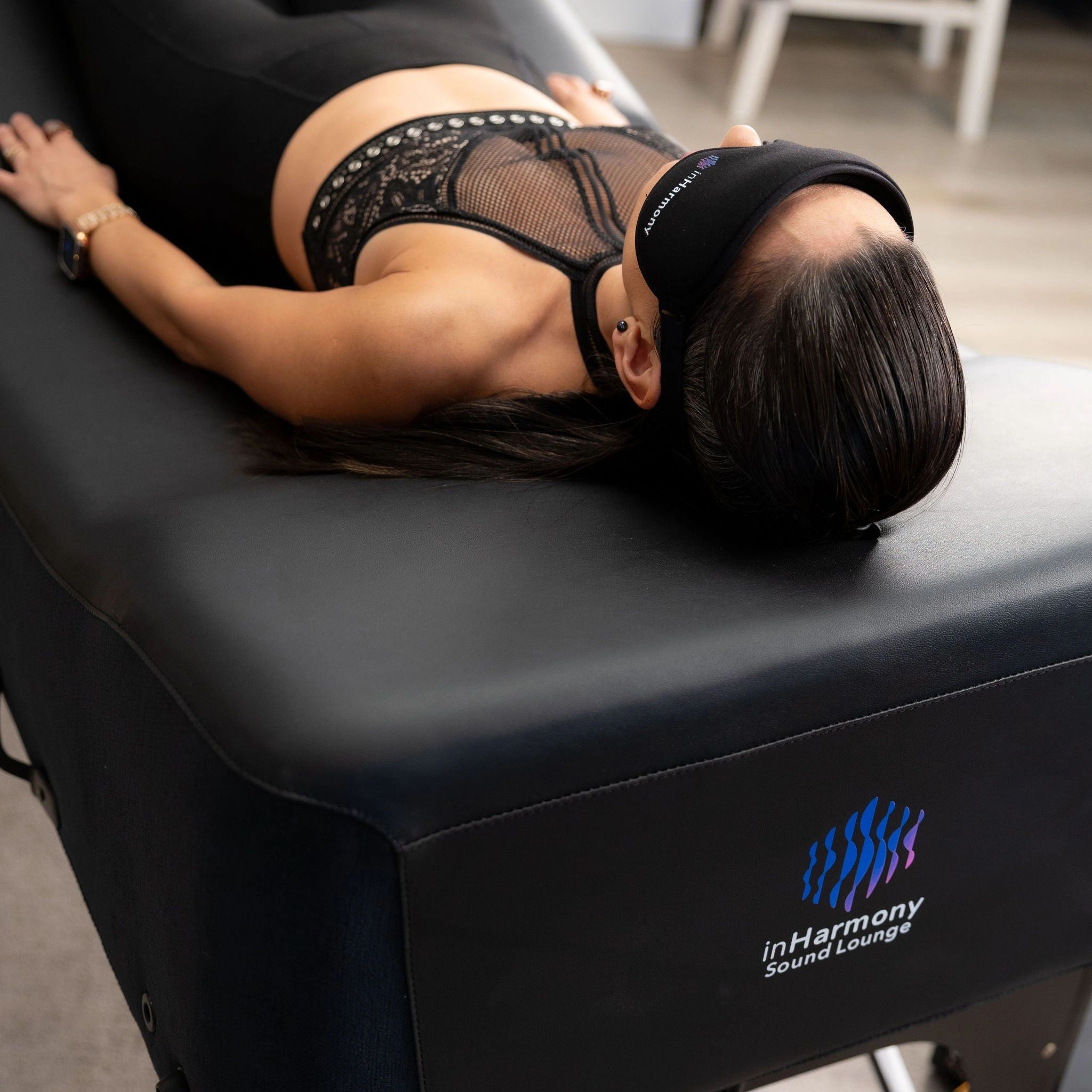
Sound and vibration therapy uses low-frequency acoustic resonance delivered through a contact lounge or chair. The body absorbs the vibration through bone and soft tissue; the literature on vibroacoustic therapy associates it with measurable shifts in heart-rate variability, parasympathetic activation, and self-reported relaxation.
At Wellness Elite Fitness the modality is delivered through the inHarmony Sound Lounge — a vibroacoustic recovery surface programmed for 20 to 30-minute sessions. Members typically schedule a session for the parasympathetic come-down on heavy training days or as a Sunday-evening reset.
When members use it
For the come-down.
Three use cases. Post-strength: when the nervous system needs a longer parasympathetic shift than the cool-down can deliver. Pre-sleep: an evening session as part of the wind-down. Acute stress: high-output weeks where HRV trends down and the nervous system needs a deliberate signal in the other direction.
Pairs with
Inside the recovery suite.
Sound and vibration sits alongside the float tank, red light, PEMF, compression, and infrared sauna. Atlas (our concierge) holds the schedule so the parasympathetic modalities stack into a coherent week rather than fight each other.
Honest screening
When to talk to a physician.
Pacemakers, recent surgery, certain seizure histories, and pregnancy after the first trimester warrant a conversation first. The signal is gentle, but the tissue response is real; we screen each new member.
Common questions
What members ask before booking.
Sound and vibration therapy at WEF draws a specific kind of member: someone whose nervous system is running faster than their recovery allows. We see this most often in Friendswood professionals managing high-output schedules, competitive athletes whose training load has outpaced their parasympathetic capacity, and members navigating the low-grade physiological noise of chronic stress — the kind that doesn't resolve with an extra rest day or an additional sauna session.
Within the WEF recovery suite, sound and vibration therapy occupies a specific position: it's a nervous system primer, not a finish line. Paired with hyperbaric oxygen therapy for anti-aging, the sequencing supports a shift toward parasympathetic tone that makes the pressurized environment more comfortable and the cellular uptake argument more coherent. It also integrates cleanly into strength training blocks: used on active recovery days between heavier training loads, it supports the tissue and neural recovery that aggressive programming demands without adding systemic stress.
Your first session at WEF will run approximately forty-five minutes. The initial portion — usually ten to fifteen minutes — is orientation: understanding your presenting goals, your current training load, and any relevant physiological context. The acoustic and vibrational frequencies are then calibrated to where you are that day, not a fixed protocol. Expect to feel a noticeable shift in mental state before the session ends. Some members describe it as the sensation right before deep sleep; others notice it as a reduction in the physical tension they didn't realize they were holding.
For members using sound and vibration as part of an active recovery strategy, two sessions per week is a reasonable working frequency. For those using it primarily for nervous system regulation alongside a demanding life outside the gym, one well-timed weekly session — ideally the evening before a scheduled rest day — tends to produce the most compounding effect. Your WEF trainer positions your cadence within your full training and recovery protocol so your dose is never isolated from the broader week.
The protocol at WEF.
WEF's sound and vibration sessions are delivered through a combination of low-frequency vibroacoustic platforms and calibrated frequency instruments that engage both auditory and somatic pathways simultaneously — you feel the sound as much as you hear it. Sessions run forty-five minutes as a standard, with a sixty-minute option available for members integrating this modality into a longer recovery block alongside HBOT or IV therapy. The acoustic environment is isolated from the main floor, which matters: the protocol depends on genuine sensory reduction, and WEF's Friendswood facility is designed to provide that without improvisation.
For members in active strength training cycles, the preferred integration point is twenty-four to forty-eight hours post a high-volume or high-intensity training session — after the acute inflammatory window, before the next loading stimulus. This positions the modality to support neural recovery and sleep architecture without interrupting the adaptive signal of the training itself.
Contraindications include active pacemaker or implanted electrical device use, certain seizure histories, and pregnancy, among others — all reviewed and documented at intake by WEF staff before your first session is confirmed. Members with a history of acute tinnitus or sound sensitivity are assessed individually rather than categorically excluded, as frequency calibration at WEF allows for meaningful accommodation in most cases.
Frequently asked.
What is vibroacoustic therapy?
Low-frequency acoustic resonance delivered through a contact lounge or chair. The body absorbs the vibration through bone and soft tissue. Associated in the literature with parasympathetic activation, HRV shifts, and self-reported relaxation.
How often should I use the sound lounge?
2 to 3 sessions per week is the cadence we program for most active members. Heavy training weeks or pre-sleep wind-down may bump it up.
How long is a session?
20 to 30 minutes is the standard window. Members usually rest with eyes closed; some use the time for breathwork.
Is this safe?
Generally well-tolerated. Pacemakers, recent surgery, certain seizure histories, and pregnancy after the first trimester warrant a physician conversation first.
Is this a medical treatment?
No. Sound and vibration therapy at Wellness Elite Fitness is a wellness modality inside a social wellness club. We do not treat, cure, diagnose, or prevent disease.
How does sound vibration therapy support sleep architecture?
The mechanism is parasympathetic — low-frequency vibration through bone and soft tissue is intended to shift autonomic tone before sleep onset. The effect compounds across consistent cadence rather than appearing in a single session.
Can sound vibration therapy be sequenced with strength training?
Yes — and the sequencing matters. Used twenty-four to forty-eight hours post a high-volume training session, sound vibration supports neural recovery without interrupting the adaptive inflammation that drives strength gains. Used immediately post-training, it can blunt the acute signal needed for hypertrophy. The WEF coaching bench positions sessions in the recovery window, not the adaptation window.
How does this fit with the broader WEF recovery program?
Sound vibration sits inside the cognitive-recovery layer of the suite, alongside float and the contrast modalities. Members on heavy decision-load weeks — executives in the EWCP cohort, founders, senior operators — often pair sound vibration with float and sauna for the cognitive layer. See the full recovery suite →


Sequenced into the recovery suite.
A modality on its own is a session. A modality sequenced against the strength block and the next training week is a practice. Membership unlocks the stack — the consult finds the right tier.
"Their wellness area is beyond phenomenal. They have a sauna, cold plunge, red light therapy, and float therapy."
Walk the suite.
A private tour of the recovery suite, the strength floor, and the consult room. No session required.
How it works.
Seven steps from first call to first quarterly re-test.
FAQ · 25 answers.
25 questions members ask most before joining.
Side by side.
Modality + facility comparisons from the editorial desk.
What it replaces.
Membership compared to the à-la-carte stack.
Friendswood hub
More on the Wellness Elite Fitness floor serving Friendswood — visit the Friendswood gym hub →